
On Stuckness
A Therapeutic Brewday to Support the Wellbeing of Neurodivergent Therapists
While on leave I spent a wonderful day in my favourite micro brewery with some lovely people brewing a beer to celebrate my upcoming book. What better way to celebrate a book about supporting neurodivergent wellbeing than engaging with a special interest. (It’s Not Just) Emotional Feelings is a Black Forest Gateau Imperial stout that we are hoping will ferment out to about 8.4%.
As we were doing a parti gyle (brewing two beers from the same malt base) it was a long day so I arrived at 6am to mash in with my brewer friend, Sean, and we were soon joined by other members of the Ladies of Darkness.

Because we knew the grain bill we were working with (it contained a lot of oats) it wasn’t a complete surprise that the mash ended up stuck. This knowledge and understanding of what it meant helped us to meet the stuckness with kindness and compassion, rather than starting the blame shame cycle then many of us fall into when things don’t go to plan.
So we didn’t try to force things, by increasing the water flowing through the sparge or opening the valve to try and drain the wort more quickly. We knew both of these would do the opposite and just compound the issue, what we needed to do was to be patient. To slow the sparge and the flow of wort out of the mash tun.
The way to speed up was to slow down.
In pre-covid days, I used to brew quite regularly and enjoyed the physical aspects of the work, which were in such contrast to my day job as a therapist. I relished the feeling of muscles being used, and the way you could (usually) predict how the day would go and what the result would be. Of course things go wrong, pumps break, heatwaves happen. But in general, if you follow the process you end up with beer, even if it is occasionally not as expected.
Then 2020 happened and the combination of autistic burnout, lockdown and developing long covid meant that the physical work in the brewery was no longer accessible to me in the way it had been. My brewing experiences reduced to the occasional Ladies of Darkness brew day and my contribution was often to sit on the stairs, observe and complete the brew sheet. It was one of many losses that came with the changes to my physical health, as I slowly felt my previous capability dwindling, just like the output of our stuck mash.
I felt stuck for a very long time.
There was lots of frustration and anger, but mostly there was grief.
Grief for what wasn’t.
Grief for what might have been.
Grief for what might never be.
I stopped being the person who could lift a sack of malt and dig out the mash, to the person who could (just about) hold the clipboard and complete the brew sheet.
It took a long time for me to process the level of grief I experienced (alongside a global pandemic and a newly realised autistic identity).
And just like our stuck mash, there was no way to force it to change, I could only accept it as it was.
It is this acceptance strand which forms the last part of my upcoming book A Therapeutic Workbook for supporting the Wellbeing of Neurodivergent Clients. It is the strand that gently encourages us to meet ourselves where we are, not where we think we should be. It asks us to stop trying to push through to elicit change, and instead to meet ourselves with kindness and compassion.
And we can only do this when we have taken the time to sit with our grief.
It is out of acceptance of the way things are that we may find change.
The curious paradox is that when I accept myself just as I am, then I can change. (Carl Rogers)
As I found myself sat on the brewery steps, waiting for the kettle to fill I thought about how it was showing myself the same compassion and kindness that had eventually brought me out of autistic burnout. It was accepting the physical limitations of the long-covid and meeting myself where I was (rather than where I thought I should be) that seemed to be the catalyst for recovery. Although I’m still hesitant to use that term with something that still feels very fragile.
Just as we made the small adjustments to the input and output flow of the sparge, I had made many small adjustments to my own inputs and outputs. Each activity, intention, value was re-examined with the knowledge and understanding of my current needs. Allowing me to make an informed choice about what would really support me in the present, regardless of what I used to believe.
It had never been just pushing through that had made the difference, in fact that is what led to my autistic burnout and contributed to how poorly I got. What made the difference was meeting myself with curiosity, kindness and compassion.
Working with stuckness is something I’m often asked about by other professionals who worry that they are not seeing change happen as quickly as expected in work with some late realising neurodivergent clients. My answer is always the same: What space has there been for grief? Sometimes our clients need time to walk round things as they are, getting to know them from all the angles, understanding what they really are, as opposed to what they thought they were. It is only when the knowledge and understanding are in place, that the acceptance can begin to come through and change might become possible.
Sometimes we need to slow down to speed up.

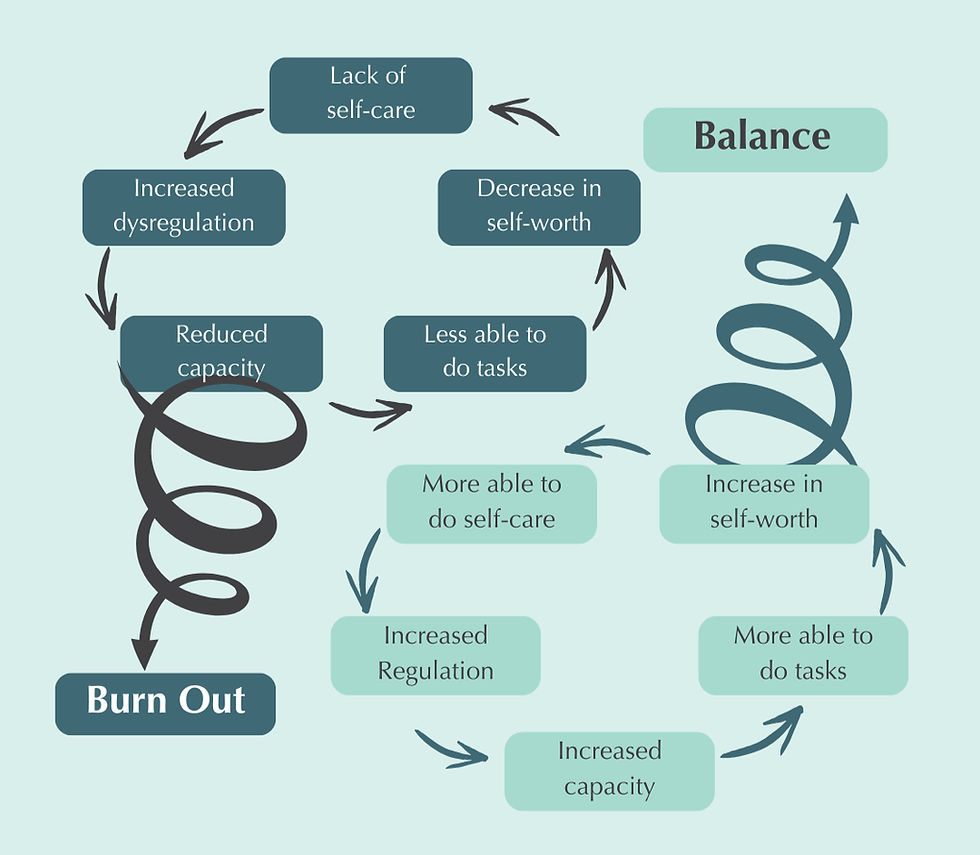
(It’s Not Just) Emotional Feelings is currently sitting in Thomas (one of the fermenters), waiting for the yeast to do its thing. If you’d like to taste it, it will be pouring at my in-person book launch. We will be celebrating the publication of A Therapeutic Workbook for Supporting the Wellbeing of Neurodivergent Clients (available for pre-order now) on Thursday 24th September at Tom’s Tap and Brewhouse in Crewe. As well as the opportunity to drink (It’s Not Just) Emotional Feelings, I’ll be talking a little about the book and the Two Spirals Model and answering questions. There will also be stickers, fidgets and possible cake. I’d love to see you there.
And if you’re not local and would like to try my beer, then you can ask your local to contact Sean Ayling at Tom’s Tap and Brewhouse for trade sales (tomstapandbrew@gmail.com).

Comments